
Esoteric, condescending, enigmatic…
If these adjectives float to the surface when conjuring up an image of a scientist I certainly don’t think you’re alone. I know they do for me…and I’m a scientist.
Scientists are notoriously bad at communicating their work, often using language that is only comprehensible to people who operate inside their small bubbles. This is particularly unfortunate because it limits the potential of science to drive our collective advancement of knowledge and understanding.
Inclusivity is key.
Given the critical and complex issues facing our planet – climate change, biodiversity loss, habitat destruction, pollution – the need to make scientific knowledge accessible is more important than ever, and scientists must get better at communicating. Research for the sake of research can be a beautiful thing as it exemplifies human curiosity and our propensity for exploration, but it is a luxury we can’t afford.
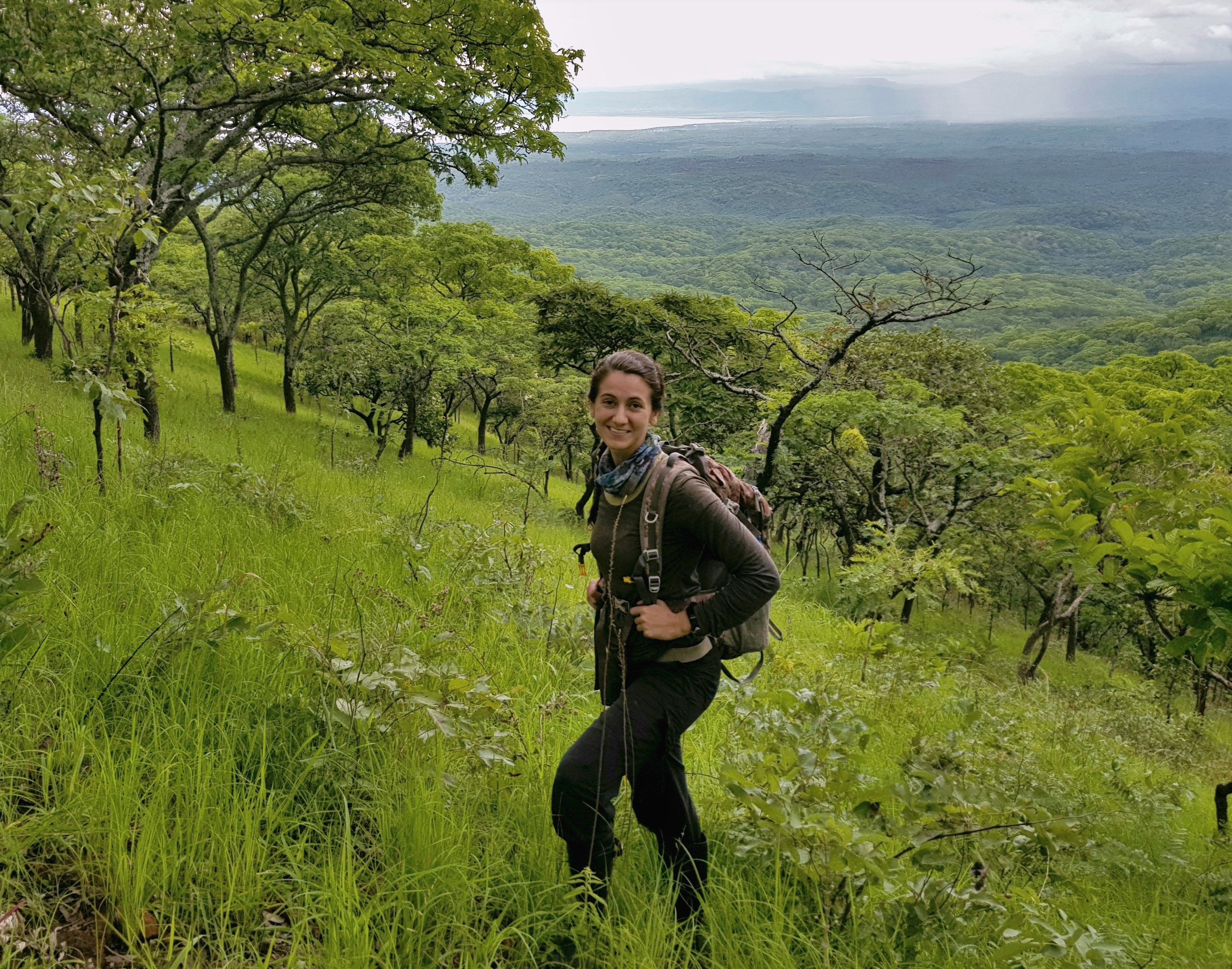
As a wildlife ecologist, I have traveled the world studying the biodiversity of our planet – chimpanzees, lions, songbirds, antelope – and the more I learn, the more I feel compelled to share with people my experiences in nature and the unrelenting necessity we have to protect it. Still, engaging with people around this topic can, at times, be surprisingly difficult.
How do you share information without sounding preachy?
How do you communicate the gravity of climate change without arousing denialism?
How do you find a message that actually resonates with people who don’t find it intrinsically interesting?
For me, nothing drives me more than the entirely personal and selfish reason that I just LOVE animals! Yes, I admit, this exclamation is reminiscent of a kindergartener who has been asked to share something they like with the class, but that’s OK. I am awed by nature, and that keeps me going.
Emotions form connections. When we need to rally for the environment, embrace broad strategies, connect people, and empower them to act. Let’s go beyond the information.
Try being a storyteller instead
Let’s be real, us nerdy scientists sometimes deal with some pretty cool stuff! So when talking about your work don’t be afraid to share your own experiences. Tell that story about the female chimpanzee soothing her daughter while she gave birth. Share how animals, even adorable furry creatures, can be assholes with the story about the baboon who stole your ice cream cone.
Oh yes, this happened to me! An unfortunate incident that took place in Tanzania while I was taking a break from the bush to enjoy a relaxing safari with family. Suffice to say it wasn’t as relaxing as I’d planned. An enormous male olive baboon decided to chase me as my whole family watched on. The thieving monkey caught up with me and then walked away with my ice cream cone, eating it just like a person would. This incident will forever make our family giggle, but it’s also created a bond between us and that beautiful place – and with whomever I share this story.
So get people to relate to nature and scientific knowledge by inspiring connections, build memories. Draw out emotion by showing some of your own. And if for no other reason, being the social and inquisitive animals that we are, a little gossip never hurts…
Bridge the divide and find commonalities
While some may hold out hope for a fresh start on Mars, for now, we’re all in this together. There is an endless list of things that divide us, but this is something we all have in common. Get everyone to the table by finding shared experiences and commonalities. Want clean air to breathe and water to drink? Check. Enjoy the morning cup of coffee or evening glass of wine? Double check.
Hard as it might be, stay positive.
Fear can be paralyzing and counterproductive. Hyper attention to the doomsday scenario can leave people feeling helpless and dismissive, “why bother, we’re already fucked”. Hope is powerful. Subsequently, as far as the carrot-stick motivational approach goes, it may be preferable to focus more on the carrot.
Encourage different ways of participation
Not everyone can be a Greta Thunberg that drives change, but I do believe the change we’d like to see in the world starts with the individual. For example, the meat industry is responsible for a big chunk of the carbon emissions and habitat destruction we see damaging our planet, but not everyone needs to become a vegetarian for a shift to occur. If this is an issue that speaks to someone, encourage them to make a change they can easily make that reflects that – buying local or Meatless Mondays – and spin the positive, that change can be exciting. Maybe it should be less about giving up meat and more about experiencing new ingredients and cuisines. Sometimes seemingly small steps, in the beginning, can lead to boundless leaps later on. If nothing else, just encourage movement!
At its core, science is a lens through which we see the world.
Through it, we may better understand ourselves, our surroundings, and the billions of connections linking us all together. Given the work that needs to be done for the planet, I hope all scientists go beyond their comfort zones and serve as ambassadors for nature by communicating their science to the world – in a way that all of us can understand and get behind.